
A Look Back at the Dell RT7D50 Keyboard
If you used a computer in an office, school lab, or home setting during the mid-2000s, there is a very high chance your fingers have danced across the keys of a Dell RT7D50. Often bundled alongside Dell Dimension and OptiPlex desktop computers, this unassuming black peripheral became the silent workhorse of a digital generation.
While modern desk setups are dominated by RGB lighting, custom mechanical switches, and wireless ergonomics, the RT7D50 holds a nostalgic—and surprisingly functional—place in the hearts of vintage tech enthusiasts and budget keyboard hunters.
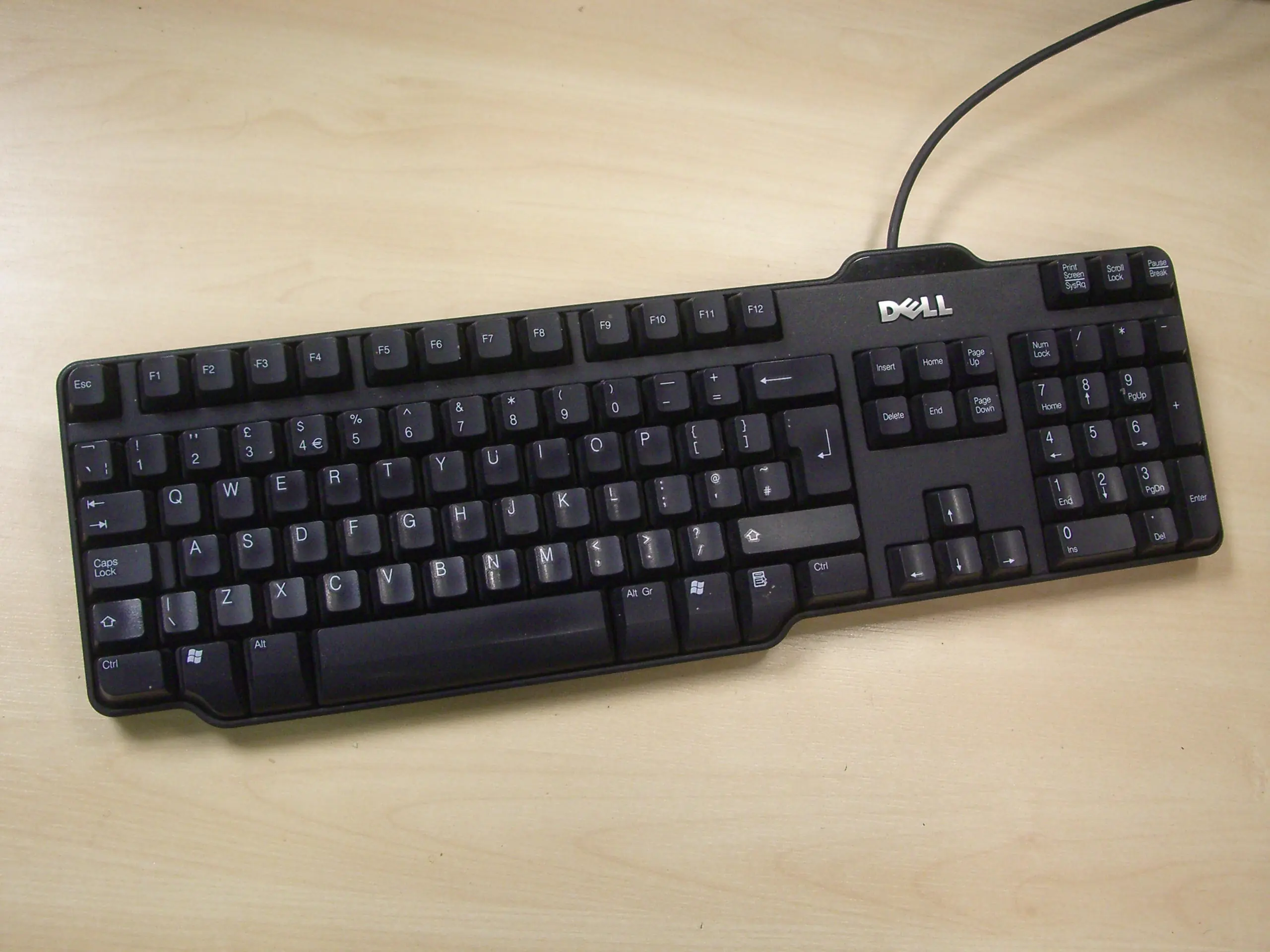
What Exactly Is the RT7D50?
At first glance, the Dell RT7D50 looks like any standard-issue membrane keyboard from the early 2000s. However, its exact engineering sets it apart from the sea of mushy, forgettable plastics of its era.
- Manufacturer: While it carries the Dell logo, the RT7D50 was actually manufactured by NMB Technologies (a company known for producing high-quality electronics and switches).
- The Sibling Rivalry: It is almost visually identical to the famous Dell SK-8115. However, while the SK-8115 was primarily manufactured by Lite-On or Chicony, the NMB-built RT7D50 is widely considered by keyboard enthusiasts to be the superior variant, offering better key stability and tactility.
- Design Philosophy: It features a “compact” chassis. Instead of surrounding the keys with thick, unnecessary plastic bezels, the board’s footprint ends almost exactly where the keys do. Despite the small desk footprint, it maintains a full-sized 104-key layout, complete with a numpad.
The Typing Experience
You will often see the RT7D50 misidentified in online marketplaces as “semi-mechanical.” Let’s clear the air: it is a traditional rubber-dome membrane keyboard. There are no mechanical springs or individual switches hiding beneath its keycaps.
Yet, the NMB rubber domes used in this specific model are legendary for their feel. They offer a snappy, responsive spring-back that mimics the tactile bump of heavier mechanical switches without the loud, clacky acoustics. Because it lacks a rigid metal backplate, the typing experience is a smooth glide rather than a harsh bottom-out. For typists who prioritize speed and fluidity over acoustic “thocks,” the RT7D50 remains a surprisingly capable daily driver.
Why Does It Still Have a Cult Following?
In an era where premium keyboards can cost hundreds of dollars, the enduring appeal of the RT7D50 boils down to a few key factors:
- Durability: These keyboards were built to survive the abuse of public school computer labs and highly trafficked office cubicles. Many units are still fully operational after nearly two decades of use.
- Affordability: You can easily rescue an RT7D50 from an e-waste bin, a thrift store, or an eBay listing for less than the cost of a cup of coffee.
- No-Nonsense Functionality: With a simple wired USB Type-A connection, it is the definition of plug-and-play. There is no proprietary software to download, no firmware to update, and no batteries to charge.
Conclusion
The Dell RT7D50 isn’t going to win any modern beauty contests, nor will it satisfy a hardcore mechanical keyboard purist looking for hot-swappable switches. However, as an artifact of mid-2000s computing history, it stands out. It proves that a bundled, mass-produced piece of plastic can still offer a premium, satisfying experience if engineered with care. If you ever find one hiding in the back of a closet or resting on a thrift store shelf, it might just be worth plugging in for old time’s sake.